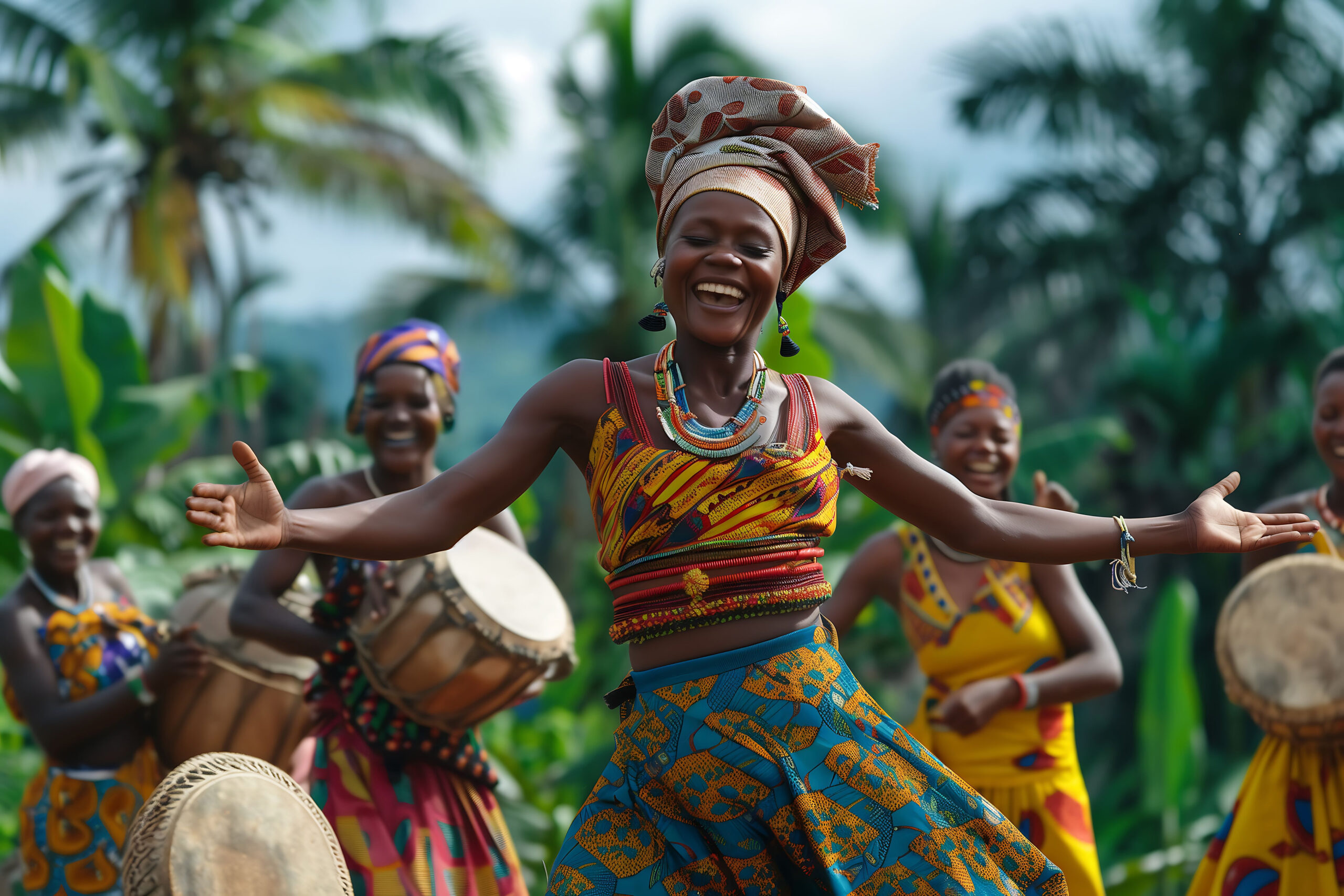
Eskista is Ethiopia’s national dance — and there is nothing quite like it on Earth. While most world dance traditions emphasize the lower body, Eskista is almost entirely upper body: dramatic rolling and bouncing of the shoulders, popping of the chest, snaking rolls of the neck. It looks impossible. It looks electric. It is both.
Origins and Meaning
Eskista originated in the Amhara highlands of northern Ethiopia and has been practiced for centuries at weddings, celebrations, and community gatherings. The word “eskista” itself means “dancing” in Amharic. In its traditional form, dancers improvise within a shared vocabulary of moves — shoulders roll forward and back in alternating patterns, the chest heaves, the neck drops and snaps. It is both athletic and deeply expressive.
Modern Eskista
Eskista originated in the Amhara highlands of northern Ethiopia and has been practiced for centuries at weddings, celebrations, and community gatherings. The word “eskista” itself means “dancing” in Amharic. In its traditional form, dancers improvise within a shared vocabulary of moves — shoulders roll forward and back in alternating patterns, the chest heaves, the neck drops and snaps. It is both athletic and deeply expressive.